
NDIS SIL Practice Standards Training
From 1 July 2026 the four new SIL Practice Standards name seven training curricula your support workers need, and providers have until 1 October to lodge a registration application. Wyzed gives you all seven modules free for your whole team, set up this afternoon.
Best for SIL and supported accommodation providers, from a single house to multi-site rosters of casual and overnight staff.
In short
NDIS SIL Practice Standards training prepares disability support workers, house leaders and Supported Independent Living providers in Australia for the four SIL Practice Standards that took effect on 1 July 2026. Seven online modules, delivered on a phone, each ending in a knowledge check and a certificate. Free for your whole team.
Wyzed is an Australian NDIS staff training and compliance platform for SIL providers. It automates the seven SIL modules, assignment by role and by house, refresher cycles, licence tracking, reminders and audit-ready evidence in one system.
Free, whole team, today. All seven SIL modules plus the other 87, downloadable certificates, no credit card
Seven curricula, named in the instrument. Six of the seven are named in the text of section 72D
A higher bar than the rest of the NDIS. “Assessed as competent” appears once in the whole instrument, in SIL section 72D, indicator 3
A refresher with no interval. Supported decision-making is the only SIL training that mandates a refresh, and the rules do not say how often
One thing Wyzed will not do. Tenancy and support agreements are participant paperwork, not a training obligation. Everything else an auditor asks a SIL provider for lives in Wyzed
Written by Aaron Price, Founder of Wyzed. We sell NDIS training software, so read the other providers’ pages too. Every regulatory claim below is quoted from the instrument and linked to the NDIS Commission so you can check it without taking our word for it.
Get all seven SIL modules free
Wyzed gives NDIS providers the complete SIL module set at no cost, for every worker on the team, with downloadable certificates. Add your staff, tag them to a house, and they start on their phones this afternoon.
All 94 modules
Including all seven SIL modules
Unlimited staff
Not a seat block, not a per-user count
Certificates included
Downloadable, audit-ready records
No credit card
We set it up in your account for you
Trusted by 350+ NDIS providers











350+
NDIS providers
18,000+
support workers trained
900+
audits supported, no training non-conformities
95%+
average training compliance rate
94
NDIS modules
Wyzed platform data, measured across active provider accounts, September 2026. How these figures are measured
The training at a glance
Everything a provider or an auditor would ask before enrolling a team.
Training set
The seven New SIL modules, inside the Wyzed library of 94 NDIS modules
Delivery
Online, self-paced, built for a phone. One SMS link, no login and no portal
Length
About four hours across the set. Individual modules run 25 to 60 minutes
Who it is for
Disability support workers, house and team leaders, and NDIS SIL providers in Australia
Assessment
A knowledge check with a pass mark on every module, on by default and adjustable per module
Completion record
A downloadable certificate per module, plus completion records by worker and by house
Team access
Unlimited staff. We set the account up in your company for you
Price
Free. An optional subscription from $96 per user per year if you continue
Standards covered
SIL Practice Standards sections 72B, 72C and 72D, alongside the NDIS Core Module
Content review
Written by industry experts, registered nurses, NDIS providers and social workers, and reviewed by an approved NDIS quality auditor before release
Last reviewed 14 September 2026 against the NDIS Quality and Safeguards Commission.
What are the new SIL Practice Standards?
Supported independent living became its own NDIS registration group, 0138, on 1 July 2026, with a supplementary module of the Practice Standards sitting on top of the Core Module you already meet. Providers who were delivering SIL before that date have until 1 October 2026 to lodge a registration application.
Registration is now mandatory. Providers already delivering SIL can keep going while their application is assessed, as long as it is lodged by 1 October. Providers who came to SIL after 1 July 2026 get no transition and cannot deliver until their registration is approved.
The four SIL Practice Standards are additional, not a replacement. You meet the Core Module in full, with the SIL module assessed alongside it for the supported living part of your service. Three of the four are about your workforce.
Source: “Supplementary module: Supported independent living (SIL)”, NDIS Quality and Safeguards Commission
Arrangements are still moving. Confirm the current position with the NDIS Quality and Safeguards Commission. Checked 14 September 2026.
Does the SIL registration group apply to your service?
You are delivering SIL where a participant needs constant, or immediately available, person-to-person support at all times during a day or for a substantial portion of a day, and that support is provided as a managed package so the person can live as autonomously as possible at home.
That is much broader than the old registration group 115 wording about assistance with daily life tasks in a group or shared living arrangement. A house you have been rostering as personal care may sit inside 0138 now. Most providers check what they called the service rather than what the service actually is.
One honest gap worth knowing: “substantial portion of a day” is not defined in the rules. The Commission has indicated that where a participant chooses and manages their own workers, including directing, planning and rostering, that is not SIL, but the rules themselves do not say so. If you are near the line, get advice rather than guessing.
What training do SIL support workers need?
Your workers need seven curricula. Section 72D, indicator 3 names four of them directly: person-centred practice, trauma-informed practice, active support and supported decision-making. Indicator 1 adds cultural safety and positive behaviour support. Safeguarding accounts for the seventh.
| What the standard requires | What your staff learn | Your Wyzed module | Where it comes from |
|---|---|---|---|
| Supported decision-making | Presume capacity, give information the person understands, and support them to weigh options and decide for themselves, including dignity of risk | An Introduction to Supported Decision Making | 72D-3, and the subject of 72B |
| Active support | Give just enough help that a person takes part in their own daily life, turning cooking and cleaning into participation rather than doing it for them | Active Support | Named in 72D-3 |
| Person-centred practice | Lead support from the person’s own goals and routines rather than a one-size-fits-all shift | Person-Centred Care in SIL | Named in 72D-3 |
| Trauma-informed practice | Recognise trauma responses and deliver support that feels safe and predictable, so a person’s home is a comfortable place to be | Trauma-Informed Support | Named in 72D-3 |
| Positive behaviour support | Understand the reasons behind behaviours of concern and use proactive strategies that reduce restrictive practices | Positive Behaviour Support, NDIS | Named in 72D-1 |
| De-escalation | Recognise early signs of distress and conflict and bring a situation down safely, at home and in the community | Responding to Aggressive and Agitated Behaviours | Safeguarding, 72C |
| Cultural safety | Support that respects each person’s culture and identity, including working respectfully with Aboriginal and Torres Strait Islander peoples | Cultural Responsiveness in NDIS Support | Named in 72D-1 |
Six of the seven are named in the text of the instrument rather than inferred. Every module is written by industry experts, registered nurses, NDIS providers and social workers, mapped to the NDIS Practice Standards, aligned with the NDIS Workforce Capability Framework, and reviewed by an approved NDIS quality auditor before release.
What does the training cover?
Seven modules, each mapped to the indicator of the SIL Practice Standards that requires it. Six of the seven are named in the text of the instrument. Every module ends in a knowledge check with a pass mark and issues a certificate.
An Introduction to Supported Decision Making
Workers learn to Presume capacity, give information in a form the person understands, and support them to weigh options and make and communicate their own decisions, including dignity of risk.
Active Support
Workers learn to Give just enough help for a person to take part in their own daily life, turning cooking, cleaning and going out into participation rather than doing it for them.
Person-Centred Care in SIL
Workers learn to Lead support from the person's own goals, routines and preferences so they stay in control of how they live day to day, rather than applying a fixed shift routine.
Trauma-Informed Support
Workers learn to Recognise trauma responses and deliver support that feels safe and predictable, so a person's home is a comfortable place rather than a source of further harm.
Positive Behaviour Support, NDIS
Workers learn to Understand the reasons behind behaviours of concern and use proactive, evidence-based strategies that improve quality of life and reduce the need for restrictive practices.
Responding to Aggressive and Agitated Behaviours
Workers learn to Recognise the early signs of distress and conflict and bring a situation down safely, including where the conflict is between two people who live in the same house.
Cultural Responsiveness in NDIS Support
Workers learn to Support that respects each person's culture, identity and background, including working respectfully with Aboriginal and Torres Strait Islander peoples.
What other training do SIL support workers need?
Beyond the seven SIL curricula, every SIL worker needs the baseline that applies across all registered NDIS services. It is the easiest thing to lose in house-level complexity, and a missing orientation module is the simplest non-conformance in the framework to avoid.
Source: “NDIS Worker Orientation Module: Quality, Safety and You”, NDIS Quality and Safeguards Commission
How should SIL services support participant choice and control?
By supporting decisions rather than making them. Section 72B requires that a participant is given information in the language and mode of communication they are most likely to understand, and is supported to make informed choices about their own home and daily life, including the dignity of risk.
In a shared house that shows up in ordinary moments: who cooks, what time the television goes off, whether someone goes out on a night they usually stay in. A worker who decides those things to keep the shift running is not delivering supported decision-making, however well intentioned.
The standard also expects workers to recognise when a decision needs more support than they can give, including where an authorised decision maker such as a nominee may be needed, and to consult the people already living in a house before a new co-tenant moves in.
The full text is in the NDIS Quality and Safeguards Commission supplementary module. Training covers the worker practice. The policies and procedures behind it stay with you.
Source: SIL Practice Standards, section 72B, supported decision-making
What does “trained and assessed as competent” mean?
The phrase “assessed as competent” appears exactly once in the NDIS Practice Standards, in SIL section 72D, indicator 3. Everywhere else in the framework, completing the training is the bar. You can check that yourself by searching the instrument.
Here is indicator 3 in the instrument’s own words: “Workers are trained and assessed as competent in evidence-based practices including person-centred and trauma-informed practices, active support and supported decision-making, to create a participant centred and safe environment for the delivery of supports and services in a participant’s home and daily life.”
That single word changes what your records have to show. The Commission talks about competence, capability and consistency. A completion tick evidences none of the three. It says a worker opened a module, not that they can do the job at midnight in a house where the usual routine did not happen.
Every Wyzed module carries a knowledge check with a pass mark, on by default, so a completion means the worker demonstrated they understood the content rather than clicked through it. You can raise or lower the pass mark per module.
Where the line falls. Wyzed evidences the training and the understanding checked inside it. Practical competency sign-off in the workplace remains the responsibility of the provider and its qualified assessor. Any platform claiming to do the second thing is overselling, and an auditor will know.
Source: SIL Practice Standards, section 72D, indicators 1 and 3
How often is SIL refresher training required?
Section 72B requires refresher training in supported decision-making and does not say how often. It is the only refresher the SIL module mandates. The standards require the refresh. They do not set the clock, so you set it, document it, and then have to hold to it.
The wording is that “relevant workers are trained, and have refresher training, in supported decision-making, including how to support the development of the participant’s ability to make decisions about the delivery of supports and services in a participant’s home and daily life and understand the impact of their decisions.” There is no interval anywhere in the instrument.
This is not a reading unique to us. DSC’s written guide to these standards is the clearest plain-English explainer we have read, and their risk and compliance specialist Paula Spencer notes the same thing: “workers will need to undergo refresher training in supported decision-making (interestingly, this is the only training in the new SIL module that mandates a refresher).”
In Wyzed you set a renewal period per module. When it comes round the worker is re-assigned automatically, gets the same one-tap text, and each round is kept with its own date and certificate.
Practice governance also expects an earlier refresh when something changes: a new co-tenant, a change in someone’s plan, an incident that exposes a gap. You can push a module out to one house the day it happens.
Source: SIL Practice Standards, section 72B, refresher training requirement
What do the SIL standards expect on incidents and risk?
Section 72C asks that people living in SIL are safe from violence, abuse, neglect and harm while still being supported to take everyday risks. In shared accommodation that explicitly includes harm between co-tenants, which a general NDIS induction rarely covers.
The workforce expectation is that a worker can recognise early warning signs, respond in a timely way using trauma-informed and person-centred approaches, and escalate when a situation goes beyond the shift. De-escalation, positive behaviour support and trauma-informed practice are the named curricula behind that.
Restrictive practice is where this gets serious. A worker needs to know when a response would be a restrictive practice, and that the question goes further than the person on shift that night.
Incident management systems, the incident register itself and reportable incident obligations sit with your provider systems, not with training. What training evidences is that the workers on that roster hold current instruction in the practices the standard names.
What records and documentation do SIL providers need to keep?
Practice governance expects your training approach to be documented, not just performed. Section 72D requires policies and procedures for planning, delivering and evaluating worker development, and evidence that workers have the skills and competency to support people in their home.
In practice that means four linked records: what each role and each house requires, what each worker has completed and when, how competency was checked, and what triggers a refresh. An auditor reads them together, not separately.
Participant information inside those records carries the same privacy obligations as anywhere else in the NDIS. Behaviour support plans and participant-specific training contain personal information, so who can see them, and the record of who has read them, both matter.
Wyzed keeps the training half of that on one worker record: modules completed with dates and certificates, refresher rounds, licence and screening currency, and sign-off on the current version of each plan you upload. Your supervision notes, incident register and participant files stay in your own systems.
Source: SIL Practice Standards, section 72D, practice governance
What does the SIL certification audit involve?
SIL is assessed through certification, the higher-rigour pathway. A Stage 1 desktop review, then a Stage 2 onsite audit that includes interviews with participants and with workers. Verification, the desktop-only pathway, does not apply.
You are audited against the Core Module plus the SIL module, plus any other module for registration groups you hold.
The worker interview is the part providers underestimate. An auditor is not only checking that training was completed. They are talking to the person on shift about how they support a resident’s decisions, and comparing that against what your records claim. That is why “trained and assessed as competent” is written the way it is.
The Commission publishes an Evidence Guide for Providers and Workers alongside the SIL module. It is worth reading before you book your audit.
What evidence does an NDIS auditor ask a SIL provider for?
Eight things: training completion by worker and by house, evidence that refresher cycles run, worker screening currency, behaviour support plan sign-off, your competency framework, supervision records, individualised emergency plans per house, and separate tenancy agreements. Wyzed produces the first four from your training data and stores the next three as your own uploaded documents. Records rarely fail because the training did not happen. They fail because nobody can answer one question fast enough: does this worker, in this house, hold current training for the people they support?
| What an auditor asks for | In Wyzed | What you get |
|---|---|---|
| Training completion by worker and by house | Yes | One live report filtered to a house, with dates and certificates |
| Evidence that refresher cycles are running | Yes | Every round on record, with the date each worker was re-assigned |
| Worker screening and licence currency | Yes | Tracked beside the training, with expiry dates and alerts |
| Behaviour support plan sign-off | Yes | Who has read which version of the plan, and when |
| Your workforce training and competency framework | Yes stored, not generated | Upload your framework and keep it beside the training records that evidence it |
| Supervision records | Yes stored, not generated | Upload and store your supervision records on the worker's record |
| Individualised emergency plans per house, rehearsed | Yes stored, not generated | Upload each house plan and require the workers tagged to that house to read it |
| Separate tenancy and support agreements | No, this one is yours | Section 72E is not a training obligation |
Only one of the eight sits outside Wyzed, and we would rather tell you that than sell you a course for it.
The SIL workforce training checklist
Everything a SIL provider needs in place for the workforce side of the new standards, in the order you would work through it. Free to use, copy or hand to your quality team.
Before you enrol anyone
Confirm you meet the current SIL definition, not the label you gave the service
List every house and the workers rostered to each, including casual and agency staff
Note which houses have a behaviour support plan or participant-specific requirements
The training itself
All seven SIL curricula assigned to every worker attached to a house
The NDIS Worker Orientation Module completed through the Commission
A current NDIS Worker Screening Check for every direct-support worker
Accredited medication training where your service administers medication
A knowledge check with a pass mark on each module, not completion alone
The evidence an auditor asks for
Completion by worker and by house, with dates and certificates
A documented refresher cycle, and proof it is actually running
Sign-off showing who has read the current version of each behaviour support plan
Your workforce training and competency framework, written down
Supervision records that check practice, not just completion
Individualised emergency plans per house, with evidence they have been rehearsed
Before the certification audit
Lodge under registration group 0138 well before 1 October 2026
Be able to answer, in one click, whether a given worker holds current training for a given house
Read the Commission's Evidence Guide for Providers and Workers
Compiled from the SIL Practice Standards sections 72B to 72E and the Commission’s published guidance, September 2026. Training supports workforce capability and governance. It does not by itself make a provider compliant.
How does Wyzed run SIL training end to end?
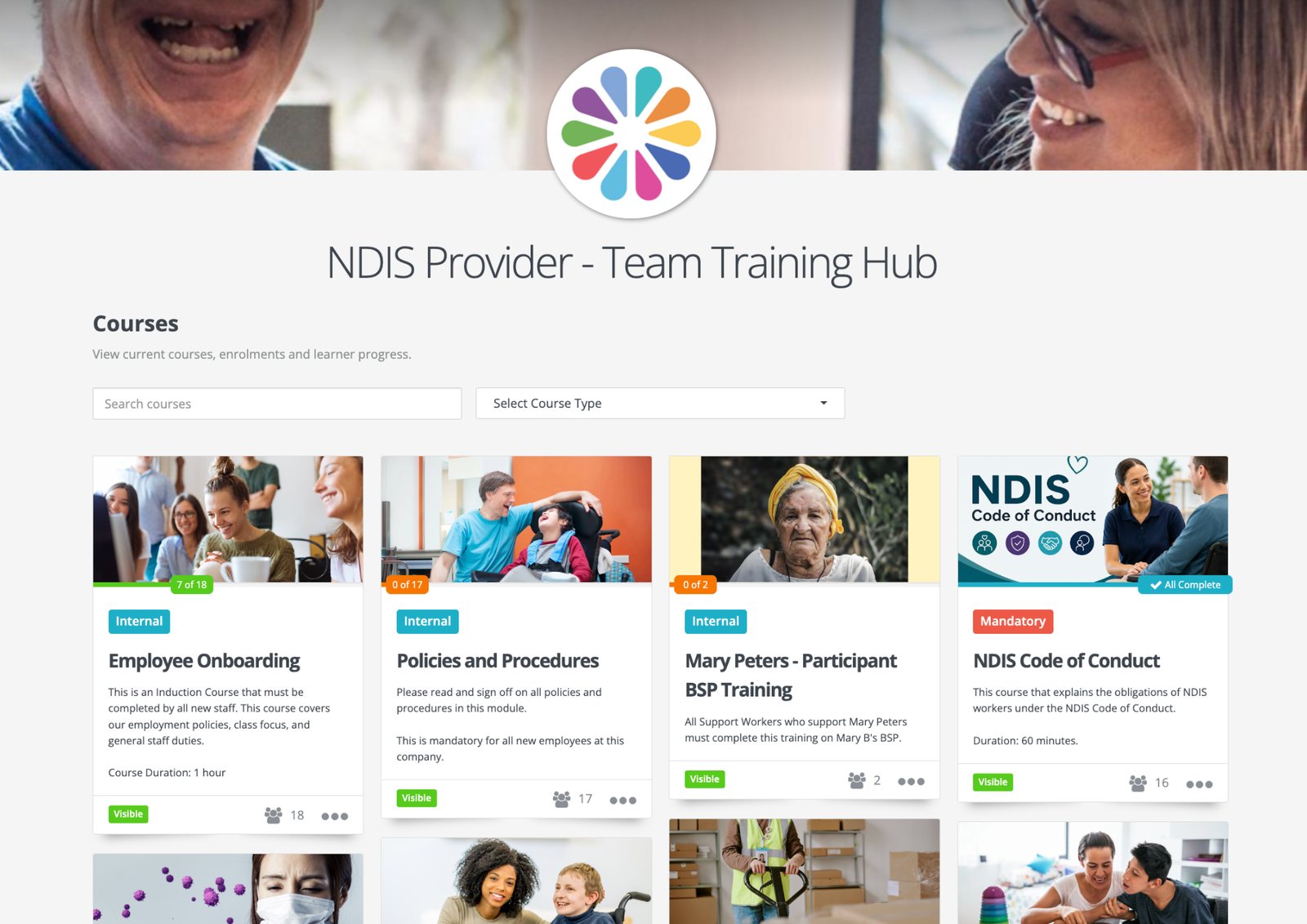
You add a support worker and tag them to the house they work in. Wyzed assigns the seven SIL modules and anything that house needs on top, texts each worker a link, chases whoever has not finished, brings them back on your refresher cycle, and keeps the record. Two parts of that are worth seeing.
Easy access for workers on their phone
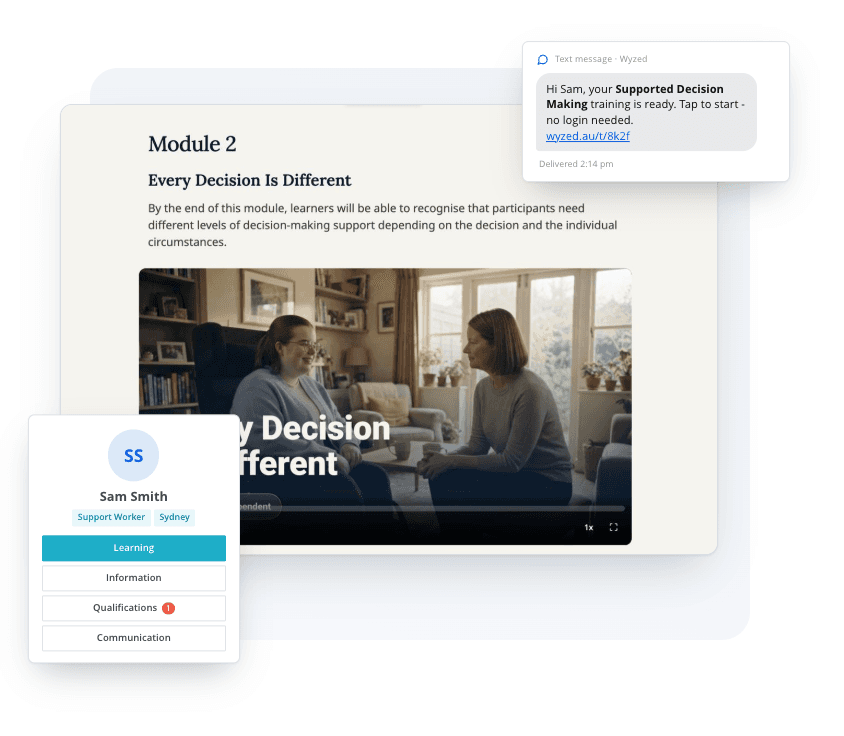
Wyzed sends each worker a text. They tap it once and go straight to the SIL training they need to complete for that house. No login, no portal, no work computer.
That matters more in SIL than anywhere else. The roster is casuals, agency staff and sleepover shifts, often people who will never sit at a work computer. A portal loses them, and a house with three untrained workers on the night roster is the gap an auditor finds.
Modules are short and built for a phone, so a worker finishes one in a break and uses it on the next shift. Most are through the first one inside two minutes of tapping the link, measured from first-module completion times across Wyzed provider accounts.
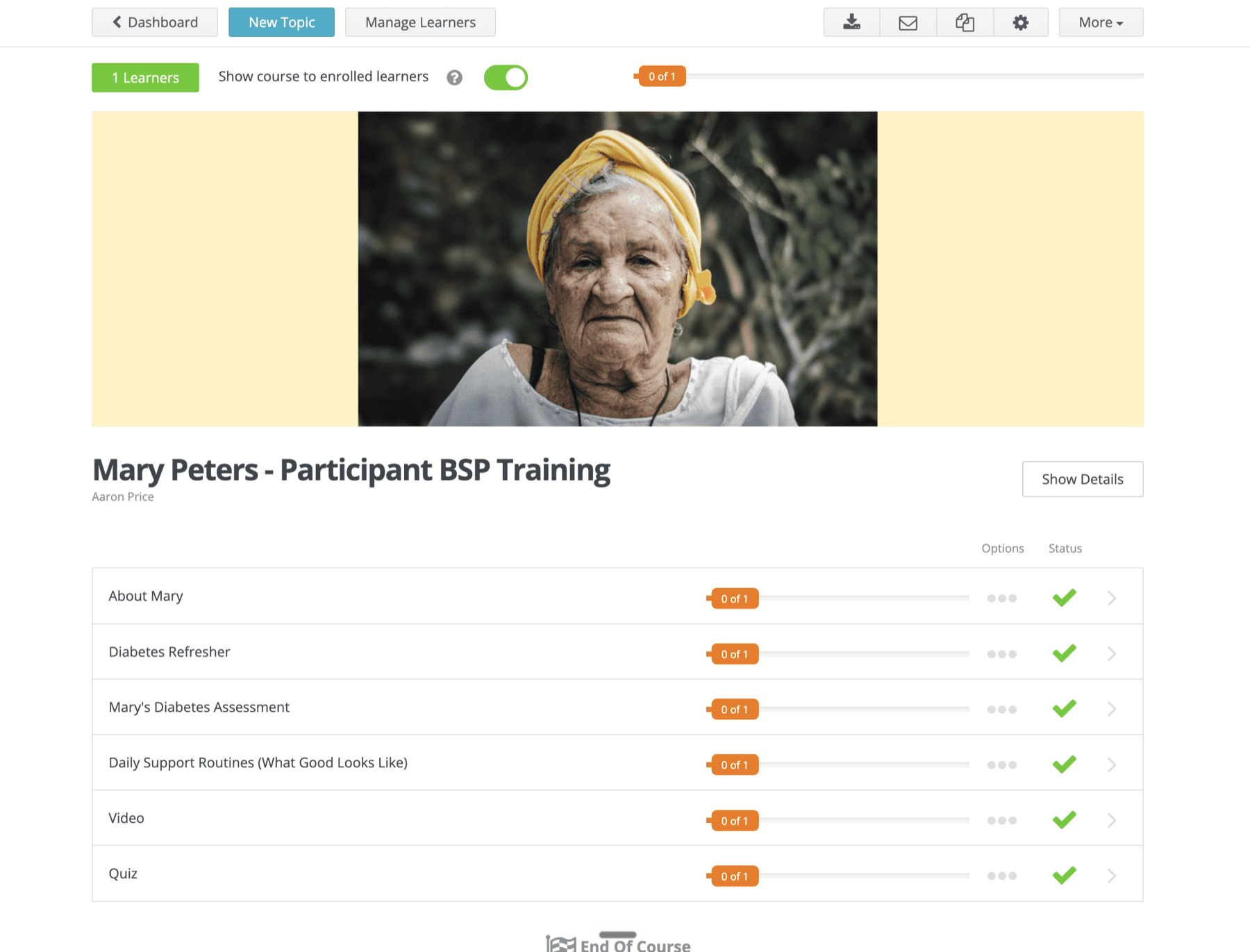
Load your behaviour support plans and house procedures
The seven modules cover the curriculum the standards name. They cannot cover the person in room two. That part is yours, and it belongs in the same system.
Build your behaviour support plans into Wyzed as modules of your own, beside ours. Same for house procedures, participant-specific training and site inductions. Then require them of everyone tagged to that house.
Update a plan, click send, and the new version goes to every worker on that roster straight away. When an incident register says a plan was not followed, the first question is whether the worker had read it. This answers that with a date.
Is SIL training free?
With Wyzed, yes. All seven SIL modules and the other 87, for every person on your team, with downloadable certificates and no credit card. We set it up in your account for you.
| Provider | What you get free | What the full thing costs |
|---|---|---|
| NGO Training Centre | Nothing | Team packages from $1,040 a year |
| DSC | Nothing | $295 a workshop, $270 a year for the on-demand library |
| Wyzed | All 94 modules including all seven SIL, unlimited staff, certificates, set up for you | Optional. From $96 per user per year if you continue |
Based on a review of publicly available provider pricing pages checked in September 2026, we found no other provider giving a whole team the complete SIL module set at no cost. Figures are from the providers’ own published pages on that date and may change. If you find one, tell us and we will say so here.
What should SIL providers do before 1 October?
Providers delivering SIL before 1 July 2026 must lodge a registration application by 1 October 2026 or stop delivering SIL. Before that date: confirm you meet the SIL definition, lodge under registration group 0138, train your workforce across the seven curricula, organise your evidence trail, and engage an approved quality auditor.
1. Confirm you are SIL under the current definition, which is all-day or most-of-day support you manage as a package. Check the service, not the label you gave it.
2. Lodge your registration application through the NDIS Commission Applications Portal, selecting registration group 0138. Do it well before 1 October.
3. Get your workforce trained across the seven curricula plus the baseline, with an assessment attached to each and a refresher cycle set for supported decision-making.
4. Sort your evidence trail so completions, certificates and assessment records are easy to produce, by worker and by house.
5. Engage an approved quality auditor and complete the certification audit.
Steps 3 and 4 are the ones providers leave until last and the slowest to fix if the training lives in spreadsheets. They are also the two you can start this afternoon at no cost.
Providers already running SIL training on Wyzed
Wyzed is used by more than 350 NDIS providers across Australia, has trained over 18,000 support workers. Customers have reported more than 900 NDIS audits completed while using Wyzed, with no training-related non-conformities reported back to us. Providers on Wyzed hold a 95%+ average training compliance rate across a library of 94 modules.

Leigh Edwards
Managing Director, Direct Community Care
“This system has cut the administrative time of developing, delivering and monitoring staff training by 80%.”

Chris Lynch
Learning, Development and Culture Coordinator, Family Based Care Tasmania
“I’ve tried a lot of different training systems in my 20-year career but nothing even comes close to how fast and easy Wyzed is. The whole team has embraced it and we had 100% compliance across 200 employees. The roll out took less than 24 hours.”

Emma Reed
Director, Tiaki Support Services
“I honestly can’t believe how easy Wyzed is. We rolled it out to our 50+ team in less than an hour. Everyone completed their training and no one got stuck or had any issues at all.”
Wyzed platform data, measured across active provider accounts for the 12 months to September 2026. Providers means active paying and free-access accounts. Workers trained means enrolled users with at least one completed module. Compliance rate means assigned modules completed by their due date. Audits supported is self-reported by customers and has not been independently verified by Wyzed. Full definitions are in sources and methodology.
About the author
Aaron Price, Founder, Wyzed. Aaron has led more than 300 NDIS training rollouts and works with providers from five-person teams to 2,000-staff organisations. LinkedIn
Published 14 September 2026. Regulatory content last reviewed 14 September 2026. We re-check this page whenever the Commission changes the SIL requirements.
Wyzed, Suite 103, 95-109 Crown Street, Wollongong NSW 2500, Australia. Contact us.
How this training is written and reviewed. Wyzed modules are written by industry experts, registered nurses, NDIS providers and social workers, mapped to the NDIS Practice Standards, aligned with the NDIS Workforce Capability Framework, and reviewed by an approved NDIS quality auditor before release. Regulatory content on this page is checked against the published position of the NDIS Quality and Safeguards Commission. Wyzed is not endorsed by, or affiliated with, the Commission.
Want to use Wyzed for your SIL compliance?
Three things people ask before they move, answered.
Connect Wyzed to everything
A free open API, plus quick connections to your HR tools, rostering and single sign-on. Wyzed sits beside the systems you already run rather than replacing them.
Move across in under 24 hours
We do it for you. Past completions and licences come with you, mapped to the right people, so nobody starts from zero and no evidence is lost.
You are never left on your own
A one-to-one account manager with unlimited Zoom, phone and email support. We set the account up, hand it over, and stay on the end of the line.
Sources and methodology
Where the regulatory statements on this page come from, and how every Wyzed figure is measured. Wyzed is not endorsed by, or affiliated with, the NDIS Quality and Safeguards Commission.
Primary sources
Supplementary module: Supported independent living (SIL), NDIS Practice Standards
Sections 72B to 72E, the four SIL standards and their quality indicators. Every section quotation on this page is taken from this instrument.
Mandatory registration and transition pathways for supported independent living
Registration group 0138, the 1 July 2026 commencement and the 1 October 2026 lodgement date for existing providers.
NDIS Worker Orientation Module, Quality, Safety and You
The one training module mandated by name for every registered provider's workers.
NDIS Practice Standards reform
The wider reform programme the SIL supplementary module sits inside.
NDIS Workforce Capability Framework
The capability descriptors Wyzed modules are aligned to.
How the figures are measured
Regulatory content
Checked against the published position of the NDIS Quality and Safeguards Commission on 14 September 2026. Requirements change. Confirm the current position with the Commission before you act on any summary, including this one.
Providers
Active paying and free-access Wyzed accounts, measured for the 12 months to September 2026.
Support workers trained
Enrolled users with at least one completed module, same window.
Average training compliance rate
Assigned modules completed by their due date, across active provider accounts, same window.
Audits supported
Self-reported by customers. Wyzed has not independently verified audit outcomes, and no training platform can guarantee one.
Module durations
The suggested duration published on each module in the Wyzed library, September 2026. One module is delivered as 11 lessons without a single stated duration.
Competitor pricing
Taken from each provider's own publicly available pricing page, checked September 2026. Prices change and are best confirmed with the provider.
Standards mapping
Each module is mapped to the indicator that names its curriculum. Six of the seven are named in the text of section 72D. The seventh sits under safeguarding in section 72C.
Go deeper into the system
Frequently asked questions
What training do SIL support workers need?
Seven curricula: supported decision-making, active support, person-centred practice, trauma-informed practice, positive behaviour support, de-escalation and cultural safety. Section 72D names six of them directly. All seven are free in Wyzed.
Is SIL training free?
With Wyzed, yes. All seven SIL modules and the other 87, unlimited staff, downloadable certificates, set up for you, no credit card. Other providers charge from $270 to $1,040 a year.
When did the new SIL Practice Standards start?
1 July 2026, alongside mandatory registration for supported independent living as its own registration group, 0138.
Do SIL providers have to be NDIS registered?
Yes. Providers delivering SIL before 1 July 2026 must lodge an application by 1 October 2026. Providers new to SIL since then cannot deliver until approved.
What happens if I do not apply by 1 October 2026?
You must stop delivering SIL supports. Check the current position with the NDIS Commission, because these arrangements are still moving.
What are the four SIL Practice Standards?
Supported decision-making, safeguarding, practice governance, and agreements about tenancy, housing and support. Three are about your workforce. The fourth is provider documentation.
Do the SIL standards replace the NDIS Practice Standards?
No. They are additional. You meet the Core Module in full, with the SIL module assessed alongside it for the supported living part of your service.
What is registration group 0138?
The NDIS registration group for assistance with supported independent living, introduced on 1 July 2026 so SIL is registered and audited in its own right.
What does trained and assessed as competent mean?
A provider needs evidence that workers understand the relevant practices and can apply them in their role. Wyzed modules include knowledge checks and completion records. Practical competency sign-off in the workplace remains the provider's responsibility.
How often is SIL refresher training required?
The standards require refresher training in supported decision-making but set no interval. You set the cycle. Wyzed re-assigns each worker automatically and keeps every round.
Which Wyzed modules cover the SIL standards?
Supported Decision Making, Active Support, Person-Centred Care in SIL, Trauma-Informed Support, Positive Behaviour Support, Responding to Aggressive and Agitated Behaviours, and Cultural Responsiveness in NDIS Support.
What does the SIL audit involve?
Certification, not verification. A Stage 1 desktop review then a Stage 2 onsite audit including interviews with participants and workers, against the Core Module plus the SIL module.
Can I see who in one house has finished their training?
Yes. Tag workers to a house and pull a live report filtered to that tag, showing completion dates, certificates, licences and what is outstanding.
Can I upload our own behaviour support plans?
Yes. Build them as modules of your own beside ours, require them of everyone tagged to that house, and see who has signed off on the current version.
Does Wyzed cover the tenancy and housing standard?
No. Agreements about tenancy, housing and support are participant paperwork, not training. You can store your competency framework, supervision records and house emergency plans in Wyzed.
How fast can we roll it out?
Same day. Add your staff, tag them to a house, and each gets a text. Most support workers finish their first module within two minutes of tapping it.
Do you replace our rostering system?
No. Wyzed holds training, certificates, licences and records. Rostering, shift swaps and payroll stay with your existing system.
What do we pay if we continue?
From $96 per user per year, coming down with team size. Everything is included and nothing is gated.
Is this training suitable for disability support workers?
Yes. The seven modules are written for frontline support workers in SIL houses, and delivered by text so casual, agency and overnight staff can finish them on their own phone.
Is the training suitable for NDIS providers and team leaders?
Yes. Leaders get the same modules plus the reporting: completion by worker and by house, refresher cycles, licence currency, and sign-off on each behaviour support plan.
Do participants receive a certificate of completion?
Yes. Every module issues a downloadable certificate, and completion records are stored by worker and by house so you can produce them for an audit.
Can we enrol a whole team?
Yes, and at no cost. Unlimited staff, all 94 modules including the seven SIL ones. We set the account up in your company for you, with no credit card.
Does this training guarantee NDIS compliance?
No. Training supports workforce capability and governance and gives you the records an auditor asks for. Compliance depends on your policies, supervision, systems and the audit itself.
Give your team the easiest NDIS training there is

Wyzed Pty Ltd, Suite 103, 95-109 Crown Street, 2500 Wollongong, Australia.
© 2026 Wyzed Pty Ltd.